
Autumn
September and grapes: how to use them in the kitchen, from starter to dessert
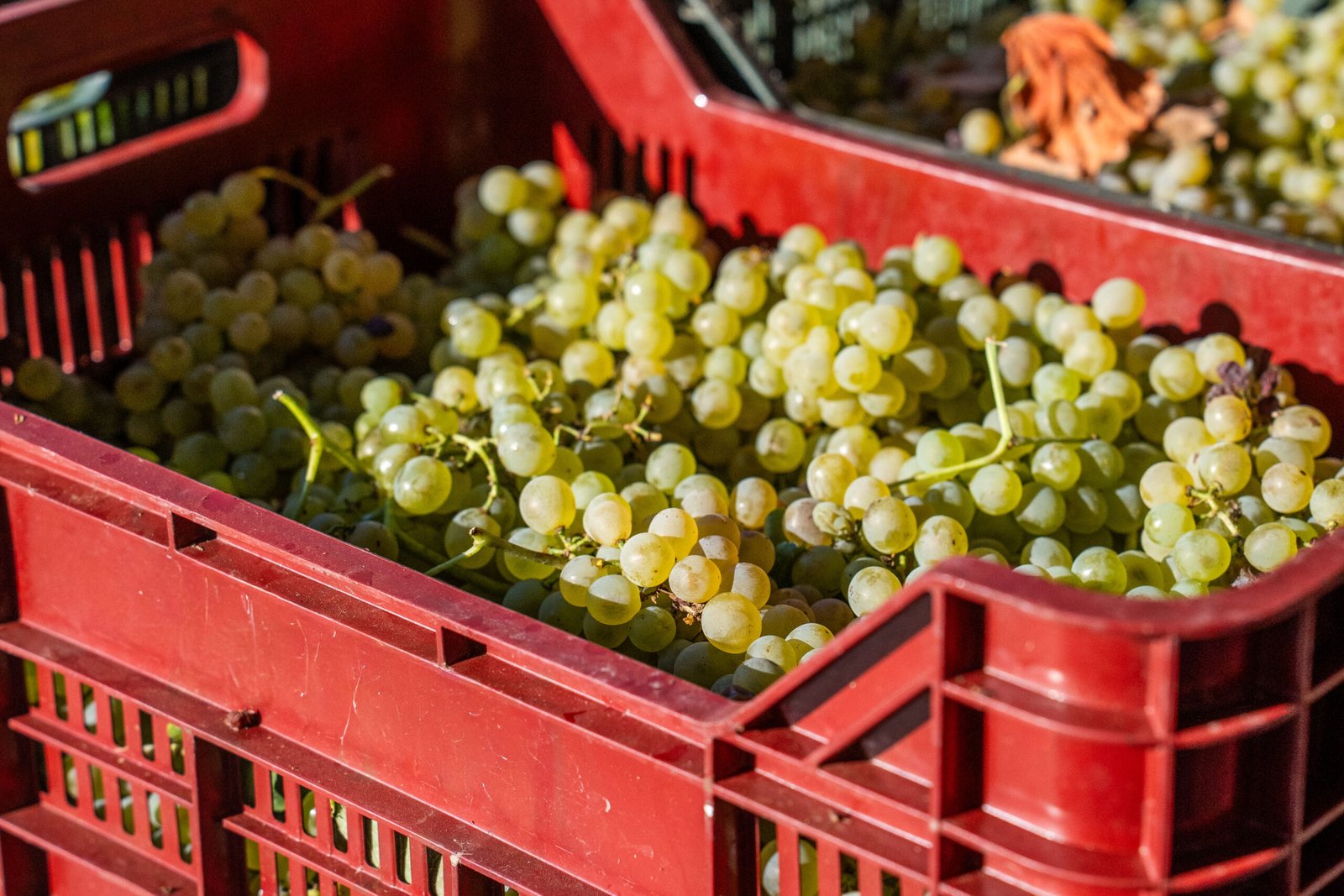
September brings ingredients that tell of the shift from summer to autumn. Among them, grapes hold a special place: fresh and juicy, they see out the warm months and recall the time of the harvest.
Eating them one berry at a time is the most immediate way to enjoy them. In the kitchen, though, their mix of sweetness, acidity and texture opens up interesting possibilities in savoury dishes too. With fish, cheese and white meat, grapes can become the element that makes a mouthful fresher, or that creates a contrast.
Table grapes and wine grapes: two different purposes
Table grapes are selected above all for how pleasant they are to eat: the size of the berries, the texture of the flesh, the character of the skin, and whether or not there are seeds. In grapes destined for winemaking, acidity, sugars and aromatic compounds matter just as much.
For cooking, table grapes are the practical choice. The varieties are not interchangeable, though: some have crisp flesh and delicate aromas, others are softer or more aromatic.
Colour alone tells you nothing about the taste. A white grape can be very sweet, while a red one can keep a pleasant acidity. Before deciding how to use them, taste them.
How to choose and prepare grapes
For raw preparations you want firm, unblemished berries with a skin that is pleasant to chew. With delicate ingredients such as fish, measured sweetness works better; with strong cheeses you can look for a sharper contrast.
Once washed, grapes should be dried with care, especially if they are headed for a carpaccio or a tartlet. Any seeds are removed by halving the berries.
The cut changes the experience too: thin slices spread the flavour, while halved berries keep a more recognisable juiciness.
Raw, grapes hold their freshness and texture; cooked, they soften and release juice. Deciding when to add them is therefore part of the recipe.
Grapes and fish: freshness in the amberjack carpaccio
Pairing amberjack, grapes and hazelnuts is built on texture. The softness of the fish meets the juiciness of the berries and the crunch of the nuts.
Thinly sliced grapes spread their sweetness instead of concentrating it in a single mouthful. Better to choose fruit with a delicate scent, able to accompany the amberjack while leaving its flavour recognisable.
For the wine, a Soave such as Pieropan's makes a delicate match. Its almond notes can echo the nuts in the dish.
Grapes and cheese: contrast in the Taleggio risotto
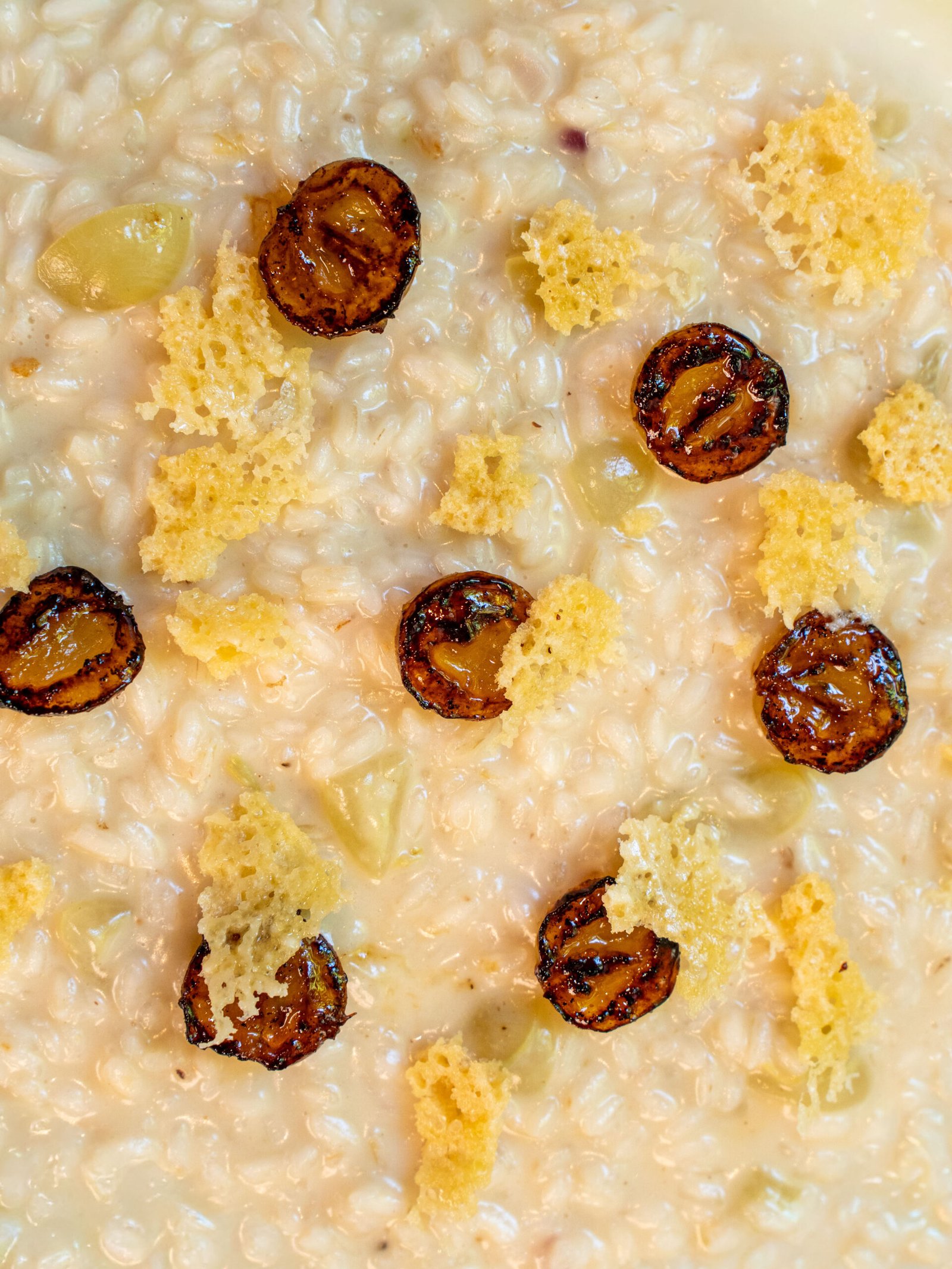
Fruit and cheese is a familiar pairing, which in a risotto takes on a different texture. Taleggio brings creaminess, savouriness and aromatic intensity; grapes introduce a sweet, fruity note.
The point is to balance the ingredients against their actual taste. If the grapes are particularly sweet, you will need fewer of them. Adding some towards the end of cooking helps preserve the texture of the berries, keeping them distinct from the creamy base.
A Gewürztraminer, such as Girlan's, is one possible match: its aromatic profile supports the character of the Taleggio and chimes with the fruit.
Grapes and white meat: how much honey
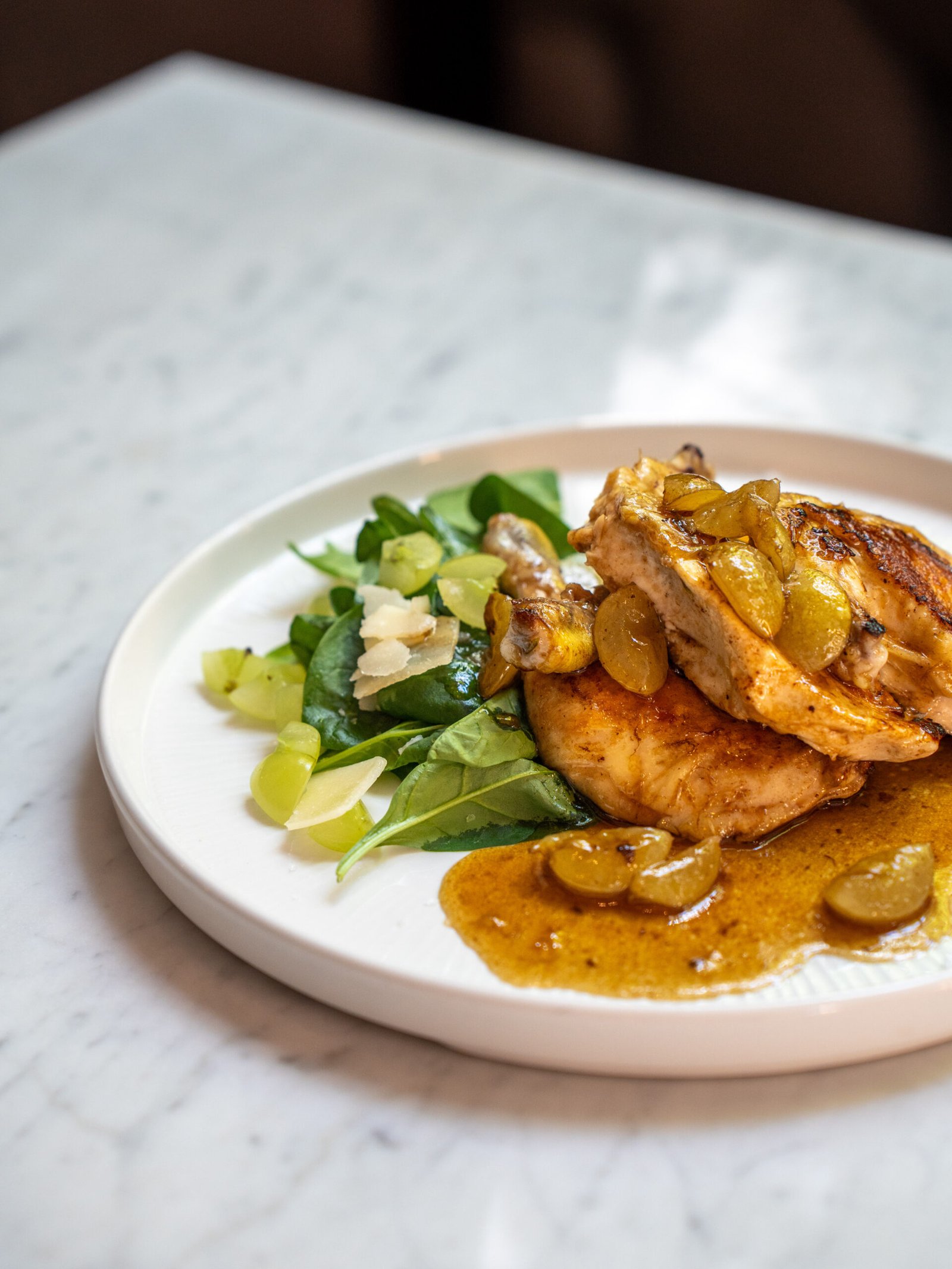
With poussin, grapes can feed the pan juices by releasing part of their own. Honey calls for care, because it brings further sweetness: how much to use is decided after tasting the fruit.
A side of lamb's lettuce and Grana shavings adds freshness and savouriness. The result depends on the whole, the garnish included, which helps vary the mouthfuls.
A fine-boned Pinot Noir, such as Girlan's «Patricia», can accompany this dish with notes of red fruit and light spice. The pairing works best when honey and grapes leave room for the taste of the meat.
Grapes and pastry cream: three textures in the dessert
A tartlet with pastry cream and grapes brings together a crumbly base, a soft filling and juicy fruit. It is precisely this alternation that makes a simple dessert interesting.
Halved berries are easier to eat and let you take out the seeds. Adding them fresh and thoroughly dried helps keep the contrast with the cream, limiting moisture on the base.
In the glass, a Moscato d'Asti such as La Spinetta's «Bricco Quaglia» accompanies the dessert with sweetness and a light sparkle. Its floral, fruity scents chime with the grapes, while the sweetness of the wine avoids the abrupt clash that can arise between a sweetened cream and a dry wine.
Storing grapes and cutting waste
Grapes keep in the fridge: remove the damaged berries and wash only the amount you are going to eat or cook with.
Softer berries, as long as they are whole and sound, can go into a compote, a sauce or a cooked preparation. Firm ones suit the dishes where texture matters.
The same grapes can therefore find different uses according to ripeness: sliced thin in a carpaccio, barely softened in a risotto, cooked alongside meat, or fresh on top of a cream.
